Private Chess Coach for Kids: Is It Worth It?
Considering a private chess coach for kids? Learn when one-on-one lessons are most helpful, what to expect, and how to find the right fit.
ABOUT CHESS
Kyrylo Demchenko
3/21/20265 min read
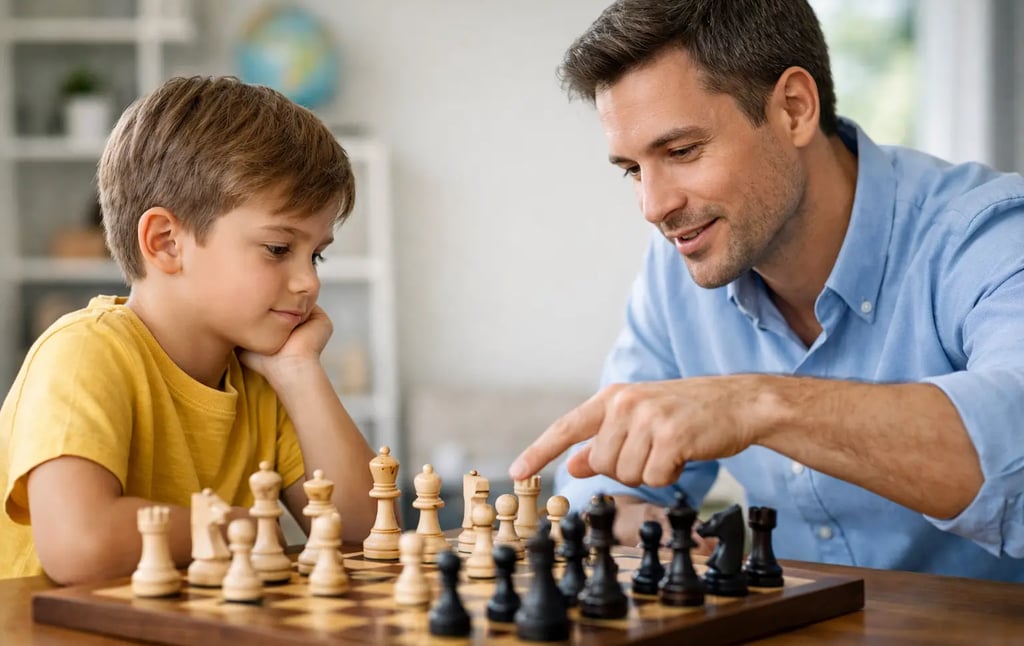
A child who loves chess can outgrow casual play fast. One week they are learning how the pieces move, and a few weeks later they are asking why they keep losing winning positions, how to prepare for a tournament, or what to do when they freeze under time pressure. That is usually the moment when parents start looking at a private chess coach for their kids and wonder whether individual lessons will actually make a difference.
Often, they do. But not for the same reason in every case.
A strong coach does more than teach openings or point out mistakes after a game. For kids, the real value is structure. Good private instruction turns scattered interest into steady progress. It gives young players a clear path, helps them build confidence, and makes practice feel purposeful instead of random.
When a private chess coach for kids makes sense
Private lessons are not only for elite players or children already winning medals. They can be a smart choice much earlier, especially when a child is motivated but needs direction.
One-on-one coaching makes the biggest impact when a student is moving at a pace that group classes cannot match. Some kids learn quickly and need more challenge. Others are bright and interested but need concepts repeated in a calmer setting. In both cases, private instruction gives the coach room to adjust the lesson in real time.
It also helps when a child has a specific goal. Maybe they want to prepare for their first tournament, improve their focus, or stop hanging pieces in every game. Group classes are excellent for community and broad-based development, but private coaching can target the exact habit holding a student back.
There is also a simple practical factor. Kids respond differently to teaching styles. Some thrive in a room full of peers. Others open up, ask better questions, and learn faster when the attention is fully on them.
What a coach should actually teach
Parents sometimes picture chess coaching as a stream of advanced tactics and famous games. That can be part of it, but for most children, effective lessons are much more grounded.
A good coach starts with decision-making. Why is this move better? What is the plan? What changed in the position? Kids improve when they learn how to think, not just what moves to copy.
From there, lessons should cover the foundations in a balanced way: tactics, calculation, opening principles, endgames, piece activity, time management, and tournament habits. The order depends on the student. A beginner may need pattern recognition and board vision first. An intermediate player may need to slow down, calculate candidate moves, and convert simple endgames. A competitive student may need game analysis and preparation for rated events.
The best coaches also teach emotional control. Children often know the right ideas in practice but rush in games, lose confidence after one mistake, or get discouraged after a loss. That is part of chess development, too. A coach who can help a child reset, reflect, and keep improving is teaching a skill that carries well beyond the board.
The real advantage of one-on-one lessons
The biggest advantage of a private chess coach for kids is the ability to customize instruction.
In a private lesson, the coach can quickly spot recurring patterns. Maybe your child attacks too early, ignores king safety, or plays too fast in better positions. Maybe they understand tactics but miss strategic ideas. Maybe they know the right opening setup but have no plan once the pieces are developed.
Those details are easy to miss in a general program and hard to fix with generic worksheets. In private coaching, they become the lesson.
This matters because chess improvement is rarely linear. A child may jump ahead in one area and lag in another. They may look strong against family members, but struggle in tournament settings. They may memorize openings and still lose endgames. Private instruction makes it easier to work on the actual gap instead of guessing.
Private coaching is not magic
That said, coaching is not a shortcut if the rest of the chess environment is missing.
Kids improve fastest when lessons are paired with regular play, review, and exposure to real competition. A weekly session helps, but it cannot do all the work alone. Students need chances to practice what they learned, make mistakes, and come back with questions.
That is why the best setup is usually not between private and group lessons. It is private lessons plus a chess community. One-on-one coaching sharpens individual weaknesses. Group classes, club play, camps, lectures, and tournaments provide repetition, resilience, and experience under pressure.
For families, this is an important trade-off to understand. If your child only takes private lessons but rarely plays serious games, progress may feel slower than expected. If they only play and never get guided feedback, bad habits can stick for a long time. The strongest results usually come from combining both.
How to choose the right private chess coach for kids
Not every strong player is a strong coach, and not every coach is the right fit for every child.
Start with teaching ability, not just chess credentials. Tournament experience and titles matter, especially for serious students, but a coach also needs to explain ideas clearly and work at the child’s level. A great youth coach knows when to challenge, when to simplify, and when to slow down.
Look for structure. Parents should be able to understand what the student is working on and why. That does not mean every lesson needs a formal report, but there should be a visible sense of progression. Good coaching is not random puzzle time.
Personality fit matters too. Kids learn more from adults they trust. The right coach is encouraging without being vague, patient without lowering standards, and professional without making lessons feel stiff.
Finally, consider the broader context surrounding the lesson. A coach connected to an active club can offer more than instruction alone. They can guide a child into appropriate events, recommend practice opportunities, and help families make smart decisions about timing, readiness, and next steps. That broader support often makes the coaching more useful.
In-person or online lessons?
Both can work well, and the better choice depends on the student.
In-person coaching can be especially helpful for younger children and beginners. It keeps attention on the board, makes communication easier, and often feels more personal. For some students, simply sitting across from a coach helps them stay engaged and absorb more.
Online lessons are convenient and effective for many kids, especially those already comfortable with digital chess platforms. They can include game review, puzzle training, visual examples, and flexible scheduling. For busy families, online instruction often makes consistent coaching possible.
The key question is not which format is better in general. Which format helps your child focus, participate, and keep momentum week after week?
What parents should expect
Progress in chess is real, but it is not always immediate or obvious from one lesson to the next.
At first, parents may notice smaller signs before rating gains. A child starts explaining their moves. They blunder less often. They become calmer after losses. They recognize tactical patterns faster. They show more patience during games. These are meaningful markers of development.
Over time, structured coaching often improves more than chess skill. Kids build concentration, accountability, and confidence in problem-solving. They learn how to prepare, recover from setbacks, and compete with composure. Those habits tend to stick.
If your child is excited about chess and asking for more, that interest deserves a real path. A private coach can provide that path, especially when lessons are part of a broader training environment that includes regular play and community support. At ChessUA Club Brantford, that combination of coaching, practice, and tournament opportunities helps students keep growing long after the first spark of interest. The right coach does not just teach better moves. They help a child enjoy the process of getting better.
Contact
Reach out anytime, we're here to help
Phone
+1-226-966-3788
© 2025. All rights reserved.